New Zealand Sauvignon Blanc is having more than just a moment; it’s firmly taken root on wine lists across the world. Aromatic and zippy, sometimes with notes of grass or bell pepper, and bursting with citrus and tropical fruits, it’s the number one requested wine in my shop, by name, followed California Cab and Italian Reds.
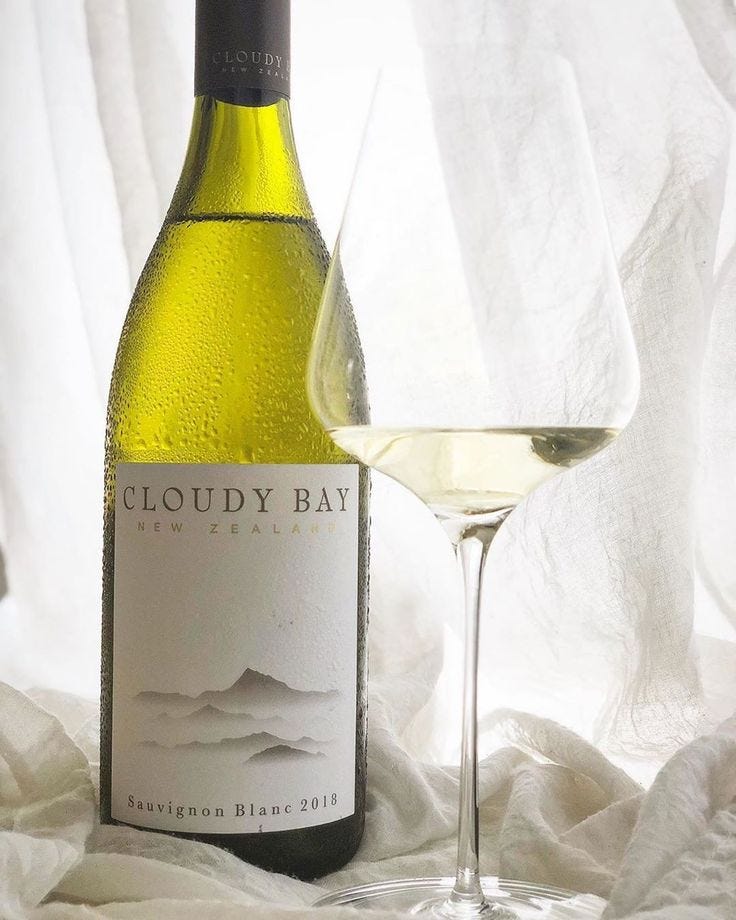
Photo from @terroir_matters.
But the interesting thing about NZ Savvy — and I pinky promise I am not judging! - is that for all of the people asking for it, very can tell me why it is they love it. In 2001, Doug Frost, MW, CMS noted “New Zealand wines are generous to a fault and, in the case of the country’s Sauvignon Blanc, some find the flavors of the wine too intense” even “bombastic.” But cool climates give the rip-you-face-off acidity that fans of natural wine love without sacrificing tropical flavors. In short, it tastes a lot like lemonade.
In short, it tastes a lot like lemonade.
But there’s all kinds of great wine. Sancerre’s Sauvignon Blanc is perfection, and there are other light zippy whites [including…?] So why would this region become such a phenomenon? Economics have a lot to do with it.
Most Sauvignon Blanc is machine harvested, an affordable alternative to the hand-harvesting needed in precarious or temperamental growing conditions. As Margot White wrote for NZ Nat Geo in 2008, “… even if some berries are riper than others at the time of harvesting, they all end up in the same stainless-steel vat. In fact, this mix of ripeness could be partly responsible for those ‘tropical fruit aromas’ and the ‘herbaceous spine’ that a Marlborough sav is so famous for.”
When winemaker Ross Spence first brought clippings to Auckland from UC Davis, in 1969, New Zealand was already experiencing a wine revolution. Like soldiers from so many countries, soldiers from New Zealand came back from World War II having been exposed to new tastes and new ways of drinking and dining. New Zealand slowly turned away from sickly sweet fortified wines, and were eager for something lighter and easier to pair with dinner. After years of Chenin Blanc and the underperforming New Zealand Muller-Thurgau*, (mistakenly planted because growing conditions were believed to be similar to Germany) the hearty Sauvignon Blanc proved a promising replacement.
Spence experienced modest success in early crops, but evidence of root infections and leaf roll virus made it a risky endeavor. When peer viticulturist from Montana Wines recognized the potential of Marlborough’s climate: long, warm days and cool nights, acidity-enhancing maritime influence, minimum rainfall at harvest and free-draining soil. Under their commercial level propagation and foreign investment from Seagram in New York City, the clone took off like a rocket.
The market, however, took a few years to catch up. Sauvignon Blanc gained a small foothold under the name “Fumé Blanc” — so dubbed by Robert Maldovi who was also experimenting dry sauvignon blancs in Sonoma — but by 1980, New Zealand wine lovers faced an onslaught of low-priced, low-quality wines in a tightening economy. The NZ government paid farmers subsidies to pull up their vines and keep wine prices low, and many took the opportunity to replace their vines with hearty Sauvignon Blanc. Determined to do damage control to New Zealand vino’s reputation in the wine world, Ernie Hunter of Hunter Wines took Marlborough Sauvignon Blanc to the International Wine Show in the UK, where it won three international awards against France’s Sancerre. Cloudy Bay entered the market as the same time with smart labeling and stellar distribution network in the United Kingdom, and all at once, Sauvignon Blanc was the name whispered round the world.
By the mid-1990s, Sauvignon Blanc and Chardonnay had overtaken the considerably less exciting* Müller-Thurgau in New Zealand as the number one varietal planted. In the United States, Sauvignon Blanc was a refreshing change from the oaky Chardonnay that had the nation in a chokehold, and names like Kim Crawford and Oyster Bay became household names. Holding at under $20/bottle, import of New Zealand wines in the U.S. have steadily grown for 16 consecutive years.
Today, in 2025, the style now accounts for over 86% of wine exported from New Zealand and remains a simple, drinkable grocery store wine. Customers have few complaints, but like too much of any good thing, critics have grown tired it. ‘So much Marlborough Sauvignon Blanc tastes as if it’s come out of the same bottomless tank,’ said critic and Club Oenologique contributor Tim Atkin MW in a 2020 review. But even as Somms snubbed it, casual wine drinkers doubled down on NZ Sauvignon Blanc during a global pandemic. Demand for vibrant, unpretentious, and consistently delicious wines sky-rocketed, and customers were happy to find something they could rely on no matter what.
So why put it on your wine list and on your shelves? In short, because it sells! And it doesn’t look like the nations thirst for this style is going to be quenched any time soon.
*Muller-Thurgau is not disappointing, it’s very cool. Don’t take my word for it, try Covée MT grown in Trentino (Italy).
0 comments